Walking around the campus of West Virginia University, you have probably seen two types of waste bins. One bin allowing you to throw away regular waste, while the other one allows you to recycle your waste.
In 2017, West Virginia University gathered 1,455 of recyclable items. This number may seem high, but is actually lower than what was gathered back in 2016.
Due to the decline in numbers, the University has been working to improve their ability for all types of items to be recycled. With the installment of single-stream recycling, WVU has had a 60% increase on their campus.
Since WVU introduced single-stream recycling, there has been a 60% increase in recycling on campus. Click on the link to learn more! @TVJ386https://t.co/84REL1NidI
Using these bins for single-stream recycling allows the community to participate in recycling, without worrying about what items they are throwing into the bins. Meaning, it makes it easier for consumers to recycle.
While many students may look past these bins without any thought in recycling, others are participating in this recycling program without realizing it. By allowing a variety of all items to be recycled, lets the normal trash bins be used for only non-recyclable items.
These everyday items are not the only things that can be recycled on campus. The Office of Sustainability allows for almost anything to be recycled. Many people may not realize that they can also recycle old electronics and ink cartridges too.
So if you’re wanting to begin a more green lifestyle, but getting started is too much to wrap your brain around, just begin by those old electronics that you have sitting around. You know, the ones you have had for years, that continue to take up space. Instead of worrying about nobody wanting to buy them, you can take them on campus and recycle them.
Recycling is an easy way to get started with going green, and doesn’t always have to be plastics or metals. It can be anything from phones, laptops, to something as simple as clothes.. Yes, even clothes are able to be recycled on campus.
You can learn more about what items you are wanting to recycle here.
Picture this: you’re at a local food joint. You place your order and wait at the next window. Your food comes out and they hand you the drink. You go to the little table where they have napkins, lids and straws. But something is different, something isn’t there. You realize the lid looks
iPetitions
different, and straws are no where to be found.
Cities like Seattle, Miami, Berkeley and many others have banned the use of straws in the cities along with many other and a few that are waiting for approval. Big companies like Starbucks and Disney are working on reducing their plastic foot print by eliminating straws and even more restaurants, even locally are banning the use of those small plastic sticks we all use to drink out of.
We're removing plastic straws in our stores globally by 2020—reducing more than 1 billion plastic straws per year from our stores.
Only about 9% of plastics used end up in recycling and the rest end up in landfill or our oceans. There is an iceberg named the Pacific Garbage Patch that floats 79,000 tons of plastic through the Pacific ocean.
So why are we starting with straws? Theres so many other forms of plastic like water bottles and tooth brushes but straws are small and can cause harm in ocean life. The most common is that they get stuck in sea turtles noses, causing them trouble with breathing.
Local businesses have joined to no straw movement. Tazikis in the Mountainlair now requires you to ask for a lid and straw and the Evansdale crossing now gives out lids that
monkey international.com
do no require a straw. Although they seem like small steps they are helping with the bigger picture of reducing plastic from the oceans.
Some businesses are dealing with backlash to the movement. Marshalls Hall of Fame Cafe in Huntington eliminated straws this past summer. They experienced backlash from locals
who need to a straw to drink, due to disabilities.
Although plastic straws are disappearing, that doesn’t mean straws are gone forever. Reusable straws made from metal, hard plastic, and even bamboo can be found on amazon or in stores like Walmart for a very cheap price. Restaurants have started to give out paper straws and biodegradable straws are coming into the market.
These biodegradable straws made from plants are the perfect alternative to plastic pic.twitter.com/cqnMYRdJ4f
West Virginia also known as the “Wild and Wonderful” state due to its abundance of wildlife could soon have that title jeopardized as climate change is impacting the state in more ways than one.
In June 2016, West Virginia Governor Earl Ray Tomblin declared a state of emergency for 44 West Virginia counties after flooding caused destruction, injuries, and in some case lives. This was the third deadliest flood on record for West Virginia which was due to heavy rainfall. In April 2018, West Virginia Governor Jim Justice issued a state of emergency again for 10 counties due to severe flooding experienced by heavy rainfall
If you keep up with politics, you’ll notice that our current president Donald Trump as well as his administration have made major changes for the EPA otherwise known as the United States Environmental Protection Agency which you can read more about on the National Geographic news page.
In short, our president and his administration took away a lot of plans that were put in action during President Barack Obama’s administration such as restrictions on greenhouse gases from coal plants which if you know anything about West Virginia, you’d know this was once primarily a coal state.
The reasons these plans were ultimately put into place was to try and slow down the toxic effects climate change is having on our environment. The structure of the state of West Virginia is mainly hills and rocky-mountains which according to the Intergovernmental Panel on Climate Change, is prime breeding ground for floods, especially flash floods like the ones we experienced in 2016 as well as 2018.
So how is the climate change bringing more rain? According to the EPA, West Virginia’s temperature has rose one half to one degree(F) in the last century which when you see it doesn’t seem like a lot but when you think about the fact that the temperature hasn’t increased that much in the billions of centuries the Earth has been here you have to think about what we as the human race are doing to make sure that there is still an Earth left for centuries to come.
As a West Virginia Native, I hold a special place for West Virginia in my heart which makes me sad to think of the fact that one day it might not be so wild and wonderful as we know it today. Global warming and its increase in rainfall for our state has already impacted us in so many ways within recent years it’s hard to tell if how long these country roads will be able to take us home.
Last month, news broke of the first rodent to go extinct due to man-made climate change. The Bramble Cay melomy, a small rodent native to Australia, was officially confirmed extinct by the Australian government on February 18th.
The reasoning behind its extinction has proven to be man-made climate change. According to National Geographic’s Brian Clark Howard, Ian Gynther from Queensland’s Department of Environment and Heritage Protection is one of many researchers who backs this claim.
“The key factor responsible for the extirpation of this population was almost certainly ocean inundation of the low-lying cay, very likely on multiple occasions, during the last decade, causing dramatic habitat loss and perhaps also direct mortality of individuals. For low-lying islands like Bramble Cay, the destructive effects of extreme water levels resulting from severe meteorological events are compounded by the impacts from anthropogenic climate change-driven sea-level rise.”
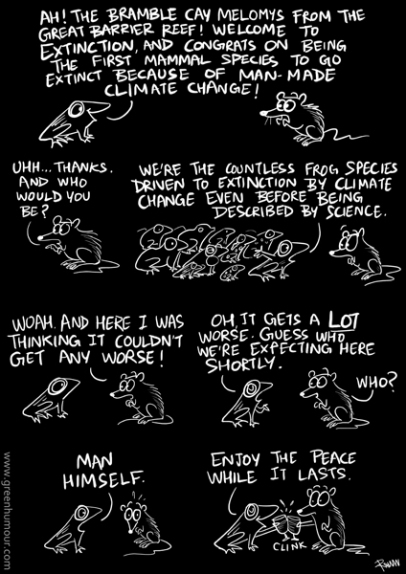
And although the extinction of the Bramble Cay melomy is something to talk about right now, this comic by First Dog on the Moon is a perfect illustration of how we never truly learn our lesson after we mourn the loss of a species.
While this extinction hasn’t taken place in West Virginia, or even on this continent, it’s a lesson and a warning of what is to come in the future if changes aren’t made, and an opportunity for us to reflect on the species closest to home that are in need of extra care.
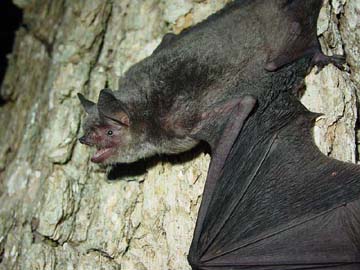
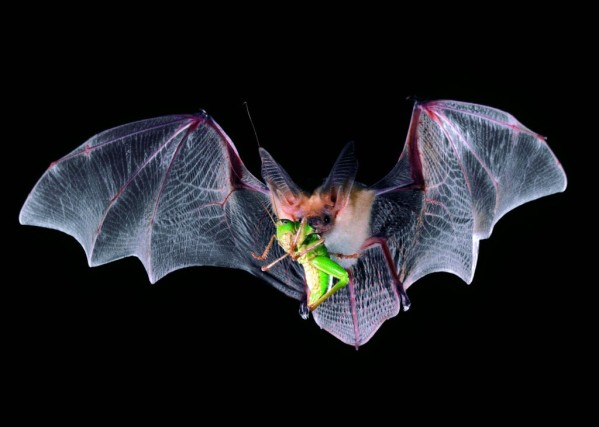
To begin with, there are many species of bats that are endangered in West Virginia including: the Virginia big-eared bat, the gray bat, and the Indiana bat.
The Virginia big-eared batresides in parts of western North Carolina, eastern Tennessee, southwestern Virginia, eastern Kentucky, and southern West Virginia. In terms of what is endangering this bat in particular, humans are the direct result according to the U.S. Fish and Wildlife Service.
Photo by John MacGregor
“The major causes of the species’ decline are loss of habitat, vandalism, and increased human visitation to maternity roosts and hibernacula. Virginia big-eared bats are extremely sensitive to human disturbance. Even slight disturbances can cause adults to abandon caves, abandon young, and force bats to use valuable energy reserves needed to survive hibernation.”
The gray bat is extremely rare in WV, and the only citing of it in Pendleton County was considered accidental, however, the state still recognizes it as an endangered species.
Photo by Adam Mann, Environmental Solutions and Innovations
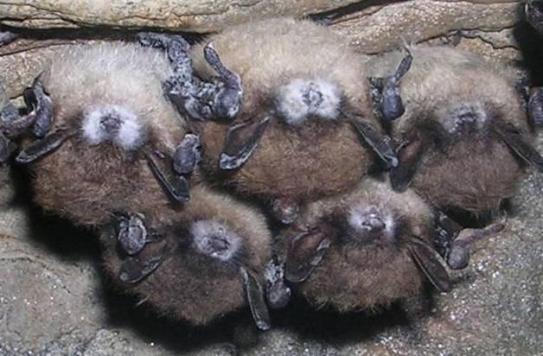
The Indiana bat resides in WV significantly more, with nearly 21,000 wintering here and dwelling in Pendleton, Tucker, Boone and Kanawha counties.
Photo by Merlin D. Tuttle/Bat Conservation International
For these two species in particular, they are currently being threatened by white nose syndrome, a fungal disease that affects hibernating bats. According to the White Nose Syndrome Response Team, “It attacks the bare skin of bats while they’re hibernating in a relatively inactive state. As it grows, it causes changes in bats that make them become active more than usual and burn up fat they need to survive the winter.”
Credit: fs.usda.gov
According to The Center for Biological Diversity, the endangerment of these bats due to white nose syndrome has the ability to affect many species in our ecosystem.
“With the disease’s appearance in the southern Appalachian region, white-nose syndrome has the potential to afflict the extremely rare, federally listed Virginia big-eared bat, whose range is limited to West Virginia, Virginia, Kentucky, and North Carolina.
While it’s very difficult to visit the caves and hibernacula where these bats live due to the adverse and dangerous effects of human disruption, there are refuges set up across the nation that provide habitats for gray and Indiana bats in order to help ensure their safety and educate the public about them.
There are also many aquatic animals that are endangered in this state such as the Guyandotte River crayfish, the candy darter, and the diamond darter.
The Guyandotte River crayfish can only be found at two sites in at Pinnacle Creek and the Clear Fork streams in Wyoming County, WV.
“Crayfishes, including the Guyandotte River and Big Sandy crayfishes, play an important role in stream environments by recycling animal and plant matter and serving as food for other wildlife, including sport fish. Keeping streams healthy for crayfish also benefits people by ensuring clean water for drinking, wading and fishing. Ongoing erosion and sedimentation have made many streams within their historical ranges unsuitable for the crayfishes.”
A bright, beautiful freshwater fish that swims through the streams of Appalachia is the candy darter. Unfortunately, almost half of the population has decreased, according to the U.S. Fish and Wildlife Service
“Nearly half of the 35 known candy darter populations have disappeared since the species was first described in 1932. Candy darter habitat historically declined when land conversion activities removed the forested and riparian habitat that sustained healthy stream conditions for the fish.”
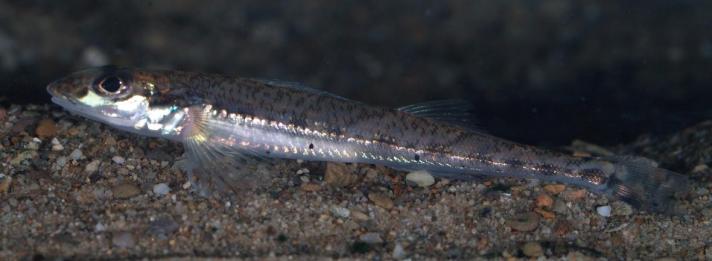
Similarly, the diamond darter is in the same boat, with the only existing population of this species being found in the Elk River in WV. Unfortunately, it’s location is one of the reasons that it is being threatened. The U.S. Fish and Wildlife Service explains the effects of these darters inhabiting the Elk River.
Photo by Stuart Welsh, USGS. Public domain.
“Coal mining, oil and gas drilling, timber harvesting, all-terrain vehicles, improper sewage treatment, and stream bank erosion all occur in the Elk River watershed. Together, these activities compound the amount and type of pollutants flowing into the river, reducing the water quality and degrading the habitat needed by diamond darters.”
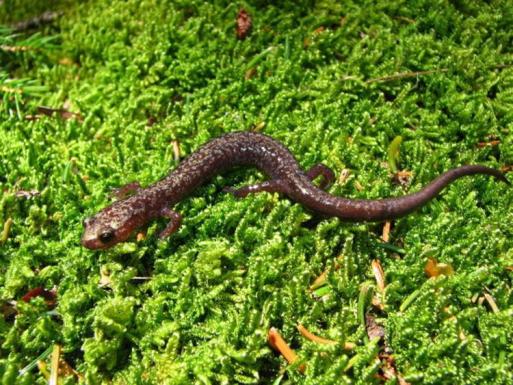
While it isn’t registered as an endangered species, it’s important to highlight one threatened species close to home, the Cheat Mountain salamander, who went face to face with the threat of extinction and came out alive after the U.S. Forest Service rejected a 10-mile segment of the proposed Atlantic Coast Pipeline.
Credit: USFWS
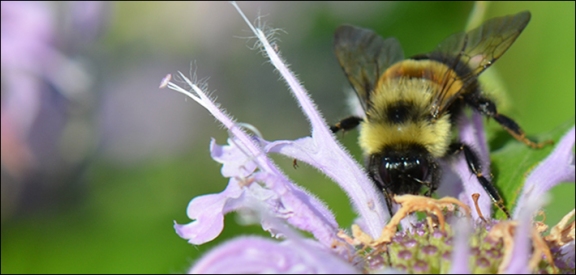
Finally, the rusty patched bumble bee is another endangered species in the state. It previously had a long history in West Virginia and 27 other states, but it can now only be found in only 5.
“The threats to the rusty patched bumble bee primarily fall into one or more of six categories: pathogens, pesticides, habitat loss and degradation (loss of floral resources), effects of climate change, competition with non-native bees, and the effects of small population dynamics.”
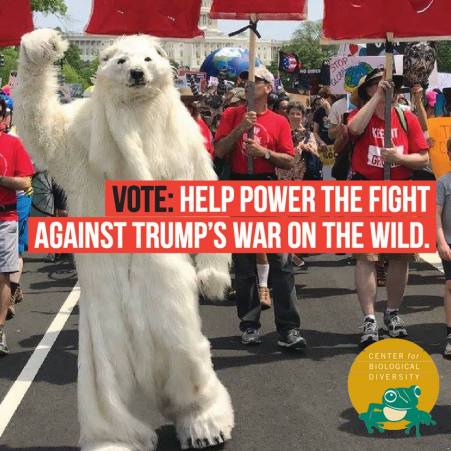
When thinking about the causes behind what’s endangering these animals, mountaintop removal is high up on the list. In a recent lawsuit filed by The Center for Biological Diversity against the Trump Administration for refusing to release public records concerning coal mining and endangered species in WV, mountaintop removal is cited as detrimental to Appalachian fish, crayfish, mussels, amphibians and insects.
“More than 2,000 miles of streams in Appalachia have been degraded by this mechanized form of mining, which employs far fewer people than other forms and perpetuates poverty by causing permanent and irreversible damage to the landscape.”
Credit: Center for Biological Diversity
Why does it all matter?
As humans and predators, it’s our responsibility to look after the less powerful things around us. Besides wanting to save the world that we live in, it’s important to be concerned about endangered species due to growing extinction rates documented by the U.S. Fish and Wildlife Service.
“Normally, new species develop through a process known as speciation at about the same rate that other species become extinct. However, because of air and water pollution, forest clearing, loss of wetlands, and other man-induced environmental changes, extinctions are now occurring at a rate that far exceeds the speciation rate.”
So while the Bramble Cay melomy is now out of sight, we shouldn’t let it be out of mind. One of the key steps in not letting history repeat itself is in never forgetting about it, and by never forgetting about these other animals, by keeping up to date and educated on them, we are able to ensure their safety. We can never get this animal back, but we can use its memory as a powerful lesson in not forgetting about the creatures who need extra protection.
When you first see one of these bad boys, your first reaction is to probably think, “pollution.” Everybody has that first initial response to thinking that any smoke stack is what is killing the planet, or even worse, the cause to global warming. Power plants do put off a large amount of gases, that can be harmful to our health and the environment. However, in Morgantown that isn’t the case anymore.
Back in 2011, Longview Power Plant was commissioned, being of the ‘newest, cleanest, most efficient coal-fired power plant.’
What makes Longview more efficient, is that this plant releases less carbon dioxide into the atmosphere, when compared to other power plants. Longview produces a percentage of its power by using natural gases. Not only does using natural gas provide a cleaner way for producing heat and electricity, it also is more economically friendly.
It doesn’t stop there though. Longview also announced that it plans to launch solar power panels, beginning in 2022. While WV falls behind when it comes to natural gas power plants, this will put the wild and wonderful state one step closer to becoming more green. The idea that a power plant that is used for electricity and heating is able to produce those usages with a solar panel and more natural gases, is every eco-friendly lover’s dream.
While this is a big step for the use of power in the state of West Virginia, hopefully it can bring other states to using more efficient fuels for their plants as well. By helping clean up these plants; these plants can help us clean up our Earth.
I’m sure you’ve all seen them, Swell water bottles. If you haven’t, then you might have been walking around with your eyes closed. Swell is a brand that blew up in 2015. The company also donates to different organizations based on the type of bottle purchased and has given every student in New York City a free bottle. After they started partnering with Starbucks,swell jumped from $10 million to $50 million in sales. Swell is considered trendy, and it was named the bottle of fashion week, so it didn’t take long for people to jump on this trend.
Brunskill Pharmacy
These water bottles are a trendy solution to reducing plastic. Plastic has completely taken over our lives. So many items in our everyday lives are made from plastic. It’s easy and coinvent for others while its everywhere and it’s a common use for water. Plastic used for water bottles contain toxins and take at least 450 years to decompose. So, switching a re-usable water bottle isn’t a bad idea.
Across campus, students are using reusable water bottles. Is this because they are being trendy or because they are actually reducing on plastic? Chyanne Morrison is a student at WVU. She uses a life is good Tervis bottle. When purchasing her bottle, she says she specifically bought it to reduce on how much plastic she was using with traditional bottles of water. Water bottles like this can be a pretty penny for a college student. The ever so trendy Swell bottle runs between $12 to $40 and Chyanne paid $30 for her reusable bottle.
Within 2 months of instalment, the station had already saved more than 900 plastic bottles. Since then the university has installed several more stations. These stations can be found in the Mountainlair, Brooks hall, CPASS, The Evansdale Crossing, The Rec and many more. Chyanne says she
darley
never has a problem finding a place to refill her bottle. The station shows in the right-hand corner how many bottles have been saved with that station alone. With the use of reusable water bottles, students are staying trendy and saving the planet.


 re wanting to begin a more green lifestyle, but getting started is too much to wrap your brain around, just begin by those old electronics that you have sitting around. You know, the ones you have had for years, that continue to take up space. Instead of worrying about nobody wanting to buy them, you can take them on campus and recycle them.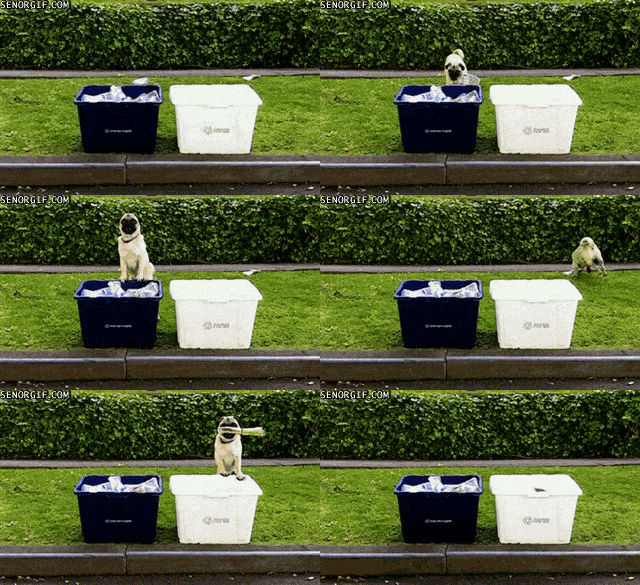


 This was the third deadliest flood on record for West Virginia which was due to heavy rainfall. In April 2018, West Virginia Governor Jim Justice issued a state of emergency again for 10 counties due to severe flooding experienced by heavy rainfall
 The structure of the state of West Virginia is mainly hills and rocky-mountains which according to the Intergovernmental Panel on Climate Change, is prime breeding ground for floods, especially flash floods like the ones we experienced in 2016 as well as 2018.
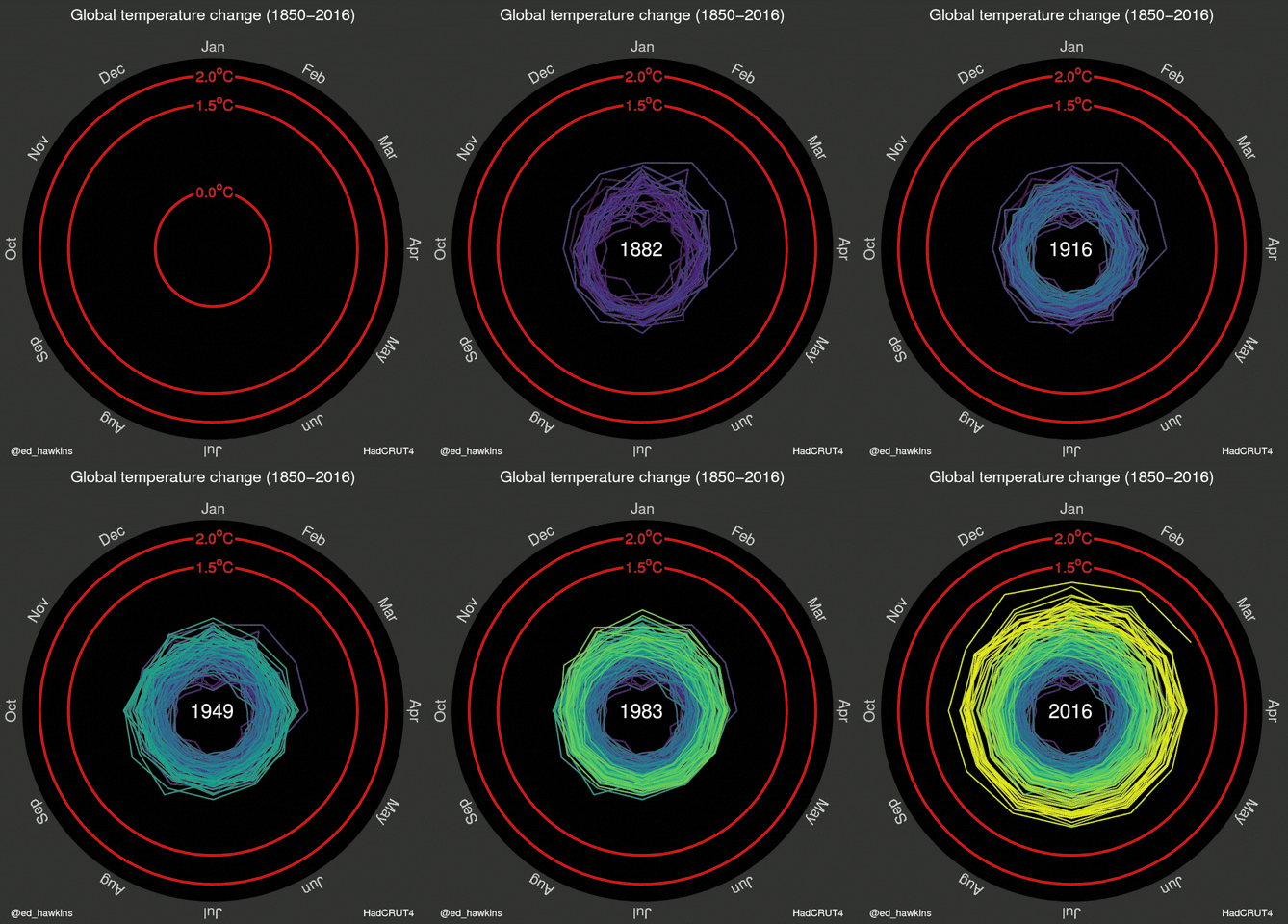 According to the EPA, West Virginia’s temperature has rose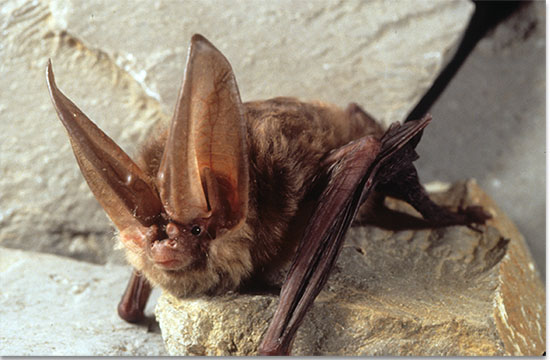
 However, in Morgantown that isn’t the case anymore.


 Almost Heaven, Almost Green