Is WVU’s Party Culture Hurting More Than Just Its Academic Reputation?

West Virginia University has long been known for its impressive and well-renowned party culture, ranking at the top of countless lists for being one of the best party schools in the country.

While the students are extremely proud of this fact (and rightfully so), university administration has tried hard to turn a new page on this reputation, hoping to show the school in a more appropriate and scholarly light, even trying to curb outside-campus activities at some points.

While they fight the good fight, another problem stems from the outrageous parties thrown by students around Morgantown: the trash, debris and general aftermath left after one of these “social gatherings.” Morgantown “townies” have raised their anger and disgust with the way their city is treated by the temporary students and City Council has tried to make changes.

So, are WVU students and their parties hurting the place they love—the place they belong—even worse than the school’s reputation?

One of the saddest examples of massive amounts of discarded trash that you can see in Morgantown is the trash strewn along the Monongahela River and Rail-Trail which you can see depicted in a livestream our writers’ team did a few weeks ago.

As the weather is warming up and classes are coming to an end, students will also now have more free time to enjoy. With that, they’ll begin flocking to nearby waterholes (quite literally) with their groups of friends and six packs of white claws to beat the heat and celebrate another passed semester. Arden Falls, Blue Hole and Cheat Lake all become very popular places for the local college students to hang out—and leave their trash.

In our past articles on this blog, like WVU Strategic Communications Students Do Their Part for Climate Change or Trends That Are Saving The Earth, we’ve praised the efforts that West Virginia students have done to help the environment. However, there’s still so much more that we can do, starting here with our home.

There’s not much to say here except we need to be better. We, as students of a prestigious, brilliant, ground-breaking university that still knows how to have fun needs to be more mindful of the community that houses us. As our president said, “We work hard, (and) we play hard, but smart,” which is extremely true. Now it’s time to find a way to be smart about how we’re treating our environment, because while we may be doing amazing things for others, we also should be focusing on ourselves, too.

Instead of leaving this post on a negative note, there is still one more story of students with true Mountaineers spirit, because we can always find those who go first. After the spontaneous snow day which the university eventually condemned as shown above, students went out and cleaned up the mess left behind, saying, “We felt it was our responsibility to go out and clean up and help out our community.” Let’s go.

Mountaintop Removal: Removing The Practice From Our Hills

Concerns over mountaintop removal have always been voiced, but has somewhat come to lose its spotlight in recent years. However, it’s seem to be regaining traction in our legislators’ eyes over the past few months, especially as coal communities ask Congress for a health study to be conducted on mountaintop removal as a coal mining procedure.

Between the push to move away from coal towards renewable resources, and the environmental issues it’s caused, like landslides and deforestation, it’s questionable how the process of mountaintop removal is still occurring to this day. West Virginia and other states in the Appalachian region take pride in their homes among the Blue Ridge Mountains, so why are we still letting this terrible practice happen to them?

A controversial form of surface mining that became highly popularized in the 1970s, coal industries have taken a lot of heat over the decades for employing these tactics despite the adverse effects that come with them.

Data from a joint study from Duke University, West Virginia University, Google and SkyTruth shows that, “strip mining across the mountaintops of Appalachia is scarring as much as three times more land to get a ton of coal than just three decades ago.” This proves the theory that the coal industries are destroying more land for less money.

“Satellite images from 1985 to 2015 show how mountaintop removal mining spread across this 12,000-square-mile area of Kentucky, West Virginia and Virginia. Credit: Christian Thomas/SkyTruth”

Not only does it hurt the environment in the true sense of the word, but also the communities of people that in these areas, too.

“To a child of Appalachia, to see the mountains laid waste, whether by clear-cutting or strip mining, is to witness a dagger plunged into the very bosom from which you sprang and which has sustained you,” U.S. Magistrate Judge Pamela Meade Sargent told Appalachian Voices.

But worry not! There are now murmurs of banning mountaintop removal completely. Democrats worried about the “elevated risks of  birth defects, cancer and premature death among residents living near large-scale Appalachia surface coal mines” are possibly trying to put a stop to this practice.

If you’re still not convinced why we should be more concerned about mountaintop removal and what these practices can do to our lovely, mountainous home states, don’t just listen to me, listen to Michael Hendryx, a lead research investigator on explosive types of surface coal mining in Appalachia, and what they can do to our health.

Thankfully we still have the next generation out there that’s ready to fight the good fight for our mountains. ⛰❤️

The Effects Of Coal In Our Own Backyards, Or Worse: Our Water

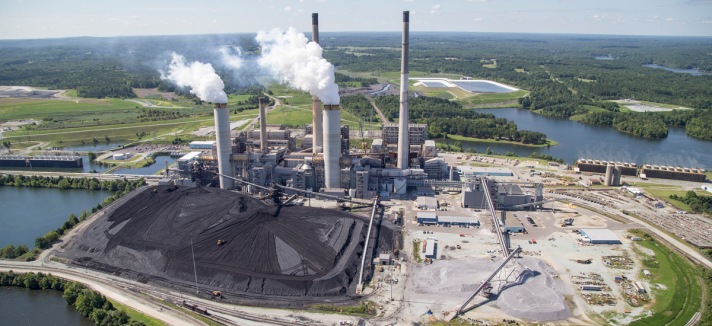
The Monongahela River, which has the potential to be a great feature of Morgantown, has become a huge eyesore and even bigger joke throughout the town and wherever else it flows. Once a great body of water for the region, now it’s been ranked as one of the most polluted rivers in the nation.

Ask anyone in Morgantown about their thoughts on the river and they’ll tell you that they’d never let that water touch their skin. The question poses itself: how did the Monongahela come to be one of the most contaminated rivers in the U.S., when Appalachia is supposed to be known for its great outdoors and beautiful landscapes?

In 2010 alone, the river was placed on an endangered list by an environmental group due to the high rates of natural gas extraction in the area. The same group issued a report stating that the cause of the Mon river’s pollution was, “from various activities, including both pre-regulation era and modern-day coal mining. ”

We’ve lived with these practices for too long, and now communities are really starting to feels the effects of it. Some say that it would even take a trillion dollars to fix the contaminated water situation in Appalachia.

But now Appalachians are starting to fight back—as they should—and make the people contaminating their water pay.

Dan River power plant, Duke Energy, Helicopter coal ash flyover,

For a long time, the plants that were dumping toxic waste into the surrounding water without consequence. Communities are starting to take a stance against this, seeking ways to place limits on the amount of pollution these plants are allowed to emit during particular seasons. It seems a little ridiculous we have to fight over the amount of toxic waste that corporations should be allowed to dump, but maybe that’s just me.

It’s time to start thinking more about the water around us, instead of just writing it off as a lost cause to the coal giants.

West Virginian Politicians Are Seeing Red When We Need Them To See Green

From its conception, West Virginia has historically been a Democrat-influenced state.

When I say Democrat, I mean the modern understanding of what we know as the party today, not the original Democrat party, founded by Andrew Jackson. Only recently has it been that West Virginians began registering and voting for the Republican party, causing one of the greatest political state shifts to date.

Not only has this caused a few heads to turn, wondering why, but the Governor of the State, Jim Justice, switched parties half-way through his term, causing a major controversy in August of 2017.

The problem here isn’t that West Virginians are deciding to become Republicans, because everyone has the right to their own beliefs. The true issue here is that they’re electing representatives that don’t support the legislations that the state and its citizens so desperately need right now.

In a time when West Virginia is dealing with major flooding, preparing for the onset of forest fire season, and just “celebrated” a record-breaking amount of landslides in 2018 due to mountaintop removal, the problems our government should really be concerned with are the ones that affect the land around us, instead of fast-tracking concealed carry on college campuses bills.

It’s no secret that, stereotypically, environmental issues are not thought to be a high priority for Republican lawmakers by the general population—but stereotypes exist for a reason.

In his manuscript, The Ideology of Climate Change Denial in the United States, Jean Moulin University Lyon 3 Professor, Jean-Daniel Collomb, dug into which political party takes what stance on the state of climate change and related topics to the two variables. In his abstract he wrote, “First, climate denial stems from the strong ideological commitment of small-government conservatives and libertarians to laisser-faire and their strong opposition to regulation.”

So if this is true, why are West Virginians still electing so many climate change-denying Republicans and Democrats that don’t seem to hold the same opinions as almost the entirety of their party, into office? If it’s because President Trump, also a member of the Republican party, promised to bring coal jobs back to Appalachia, he’s not doing a very good job. In fact, those job are at an all time low since he’s been in office.

Whatever’s happening in West Virginia’s politics, something needs to be fixed pertaining to our environmental policies—and fast. If the past decade of natural disasters and extreme weather has been enough of a warming, we are all certainly doomed.


The Green New Deal: How Will the New Program Affect Appalachia—If At All

The Green New Deal, a pet project of more leftist-leaning members of the Democrat party, has been making waves not only on Capitol Hill, but all around the United States in just the few short months that we’ve been into 2019. Some have even pointed out that individual states have their own versions of the proposed plan already in place.

Image result for green new deal
Creating a Road Map for a “Green New Deal” – The New Yorker

However, it is still feels that there’s a little animosity surrounding this plan, specifically from the people of Appalachia.

It’s fair to ask why do Appalachians feel this way? Because honestly, what will this supposedly perfect program do for the region, one that’s usually forgotten about by the rest of the country?

Some say that it’ll be great:

“In recent years, US energy markets have moved away from coal in favor of natural gas, causing coal company bankruptcies and mine closures in Kentucky, Ohio, Virginia, and West Virginia. The area “has seen incredible economic hardship,” Deputy Executive Director of Appalachian Voices Kate Boyle told Vice.

While others think the politicians who crafted it completely did so without Appalachians in mind:

“As I was thinking and reading about the GND, a couple things stuck out to me and, of course, one of them is that rural does not appear to be mentioned at all,” Director at Tennessee-based Center for Rural Strategies Whitney Kimball-Coe told 100 Days.

With so many different versions of one story being told, it’s hard to decide what to believe or even figure out what the laws our government are trying to put in place will be.

Between the record-breaking flooding we’ve seen in the past few years, to the general decline of the population’s health, an initiative like a Green New Deal in Appalachia is clearly much needed—and some Appalachians have tried to do just that.

Many third-party organizations have taken matters into their own hands because they feel that the federal government hasn’t given their situation the proper attention it deserves. For example, The Reclaiming Appalachia Coalition and fellow agriculture ventures have begun investing in alternative farming, like CBD and and hemp. Coal won’t be a feasible resource forever—shoot, it hasn’t been one for a few years now, considering the technology we have.

However Appalachians decide they feel towards the Green New Deal—should it actually even makes it to legislation—some sort of environmental action needs to be done here, whether it’s done by government action or outside crusaders.

For more on the Green New Deal in Appalachia, check out the West Virginia Public Broadcasting’s podcast on it here.